
It looks like economic growth has slowed, which validates our somewhat cautious stance that we have had since the beginning of the year. There are certainly companies doing better than the overall economy (many of which we own); but, we will remain in a defensive position for the time being. Of course, as “bargains” (solid companies, continuing to grow dividends at exceptional rates) are available we will consider investing some of our cash holdings for longer term growth.
Please read the report below my signature for details of the current economic picture.
Meantime, do not hesitate to contact us if you have any questions.
All the best,
Scott
P.S. We are grateful for our clients, who continue to place their trust in us – and have been showing that confidence in us by referring us to their friends and relatives. It does NOT go unnoticed! Our goal is to give them the same level of service and professionalism we show you.
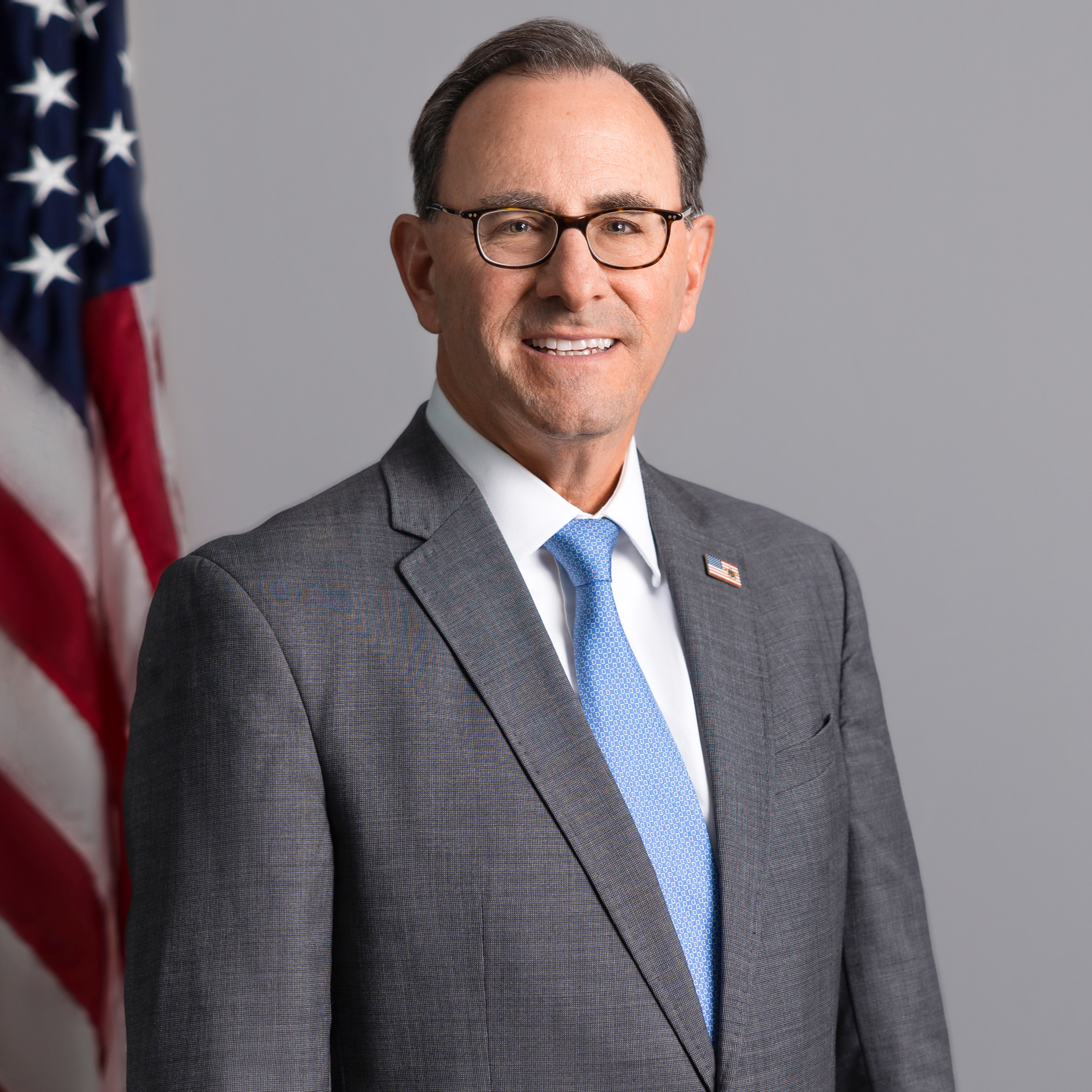
Managing Director-Investments, Senior Portfolio Manager, Omega Portfolio Management

GDP: Mediocre Top-Line, Weaker Details
Brian S. Wesbury, Chief Economist
Robert Stein, Deputy Chief Economist
For all the chatter about Artificial Intelligence lifting economic growth, GDP isn’t showing it yet. We are projecting that real GDP grew at a 2.0% annual rate in the first quarter, matching the average annualized pace of growth since the peak back in late 2007, right before the Financial Panic and so-called Great Recession. In other words, mediocre growth.
But the details for the first quarter are likely to be worse than the headline. Real GDP grew at a slow 0.5% rate in the fourth quarter of 2025 in some part because it was artificially held down by a lack of purchases by the federal government during a prolonged shutdown. Excluding government, Real GDP grew at a 1.7% rate in Q4. For the first quarter, this process should work in reverse. Purchases by the federal government went back to normal in Q1, which should artificially boost GDP growth for the quarter.
We are estimating that although overall real GDP grew at a 2.0% pace in Q1, excluding government purchases it grew at about a weak 1.1% pace. Robust growth, this is not.
The US economy is not in recession, but it is not in a boom either. Remember, the size of government boomed during COVID and has not fully returned to its pre-COVID level. In the meantime, government spending has been roughly flat the past year or so. In time, this will help boost economic growth. But in the short-term it can cause some indigestion.
Consumption: Auto sales declined at a 2.1% annual rate in Q1 while “real” (inflation-adjusted) retail sales excluding autos rose at a 1.8% rate and real service spending appears up at a 2.6% pace. Combined, this brings our estimate of real consumer spending to a 1.6% rate, adding 1.1 points to the real GDP growth rate (1.6 times the consumption share of GDP, which is 68%, equals 1.1).
Business Investment: We estimate a 2.4% growth rate for business investment, with gains in equipment and intellectual property leading the way and commercial construction a continuing drag on growth. A 2.4% growth rate would add 0.3 points to real GDP growth. (2.4 times the 14% business investment share of GDP equals 0.3).
Home Building: Residential construction is still weak and appears to have declined at about an 11.0% rate in the first quarter, possibly reflecting a lack of workers to build homes while strict immigration enforcement makes more units available for rent. An 11.0% annualized drop would be a 0.4 point drag on real GDP growth. (-11.0 times the 4% residential construction share of GDP equals -0.4).
Government: The shutdown of the federal government in the fourth quarter artificially held down purchases for that quarter but should result in a rebound in Q1. We estimate these purchases rose at a 6.5% rate in Q1. The rebound in Q1 should add 1.1 points to the GDP growth rate (6.5 times the 17% government purchase share of GDP equals 1.1).
Trade: It looks like the trade deficit grew slightly in the first quarter, although this forecast may change when the trade report arrives Wednesday morning. For now we’re projecting net exports will reduce the Q1 real GDP growth rate by 0.3 percentage points.
Inventories: It looks like businesses added to inventories at a faster pace in the first quarter than late last year, which should add what we estimate to be 0.2 percentage points to real GDP growth.
Add it all up, and we get a 2.0% annual real GDP growth rate for the first quarter. Without government, annualized growth would be around 1.1% in Q1 after 1.7% in Q4, which is the epitome of mediocre growth.
This communication should not be construed as an offer to sell or the solicitation of an offer to buy any security. The information enclosed herewith has been obtained from outside sources and is not the product of Oppenheimer & Co. Inc. or its affiliates. Oppenheimer & Co. Inc. has not verified the information and does not guarantee its accuracy or completeness.
The S&P 500 Index consists of 500 stocks chosen for market size, liquidity, and industry group representation. It is a market value weighted index (stock price times number of shares outstanding), with each stock’s weight in the Index proportionate to its market value. The Index is one of the most widely used benchmarks of US Equity Large Cap performance.
©2026 Oppenheimer & Co. Inc. Transacts Business on All Principal US Exchanges and is a Member of SIPC