
OPPENHEIMER 145 Years of History
Rooted in History. Shaped for Tomorrow.
Founded in 1881, Oppenheimer’s story spans the earliest days of Wall Street to today’s global financial markets. From our origins as Fahnestock & Co., through periods of economic transformation, expansion, and resilience, the firm has continually evolved to meet the needs of each new generation of clients.
Today, Oppenheimer operates 86 branch offices across the United States, with international offices in Europe, Israel, and Asia—reflecting the scale and reach of a firm built to serve clients wherever opportunity exists. Across 145 years, one principle has remained constant: a commitment to long-term relationships, thoughtful guidance, and forward-looking growth.
View our history video to learn more, and explore Oppenheimer’s journey through the eras in the interactive timeline below.
Our History
Guiding Generations for 145 Years
A Pillar of Early American Finance
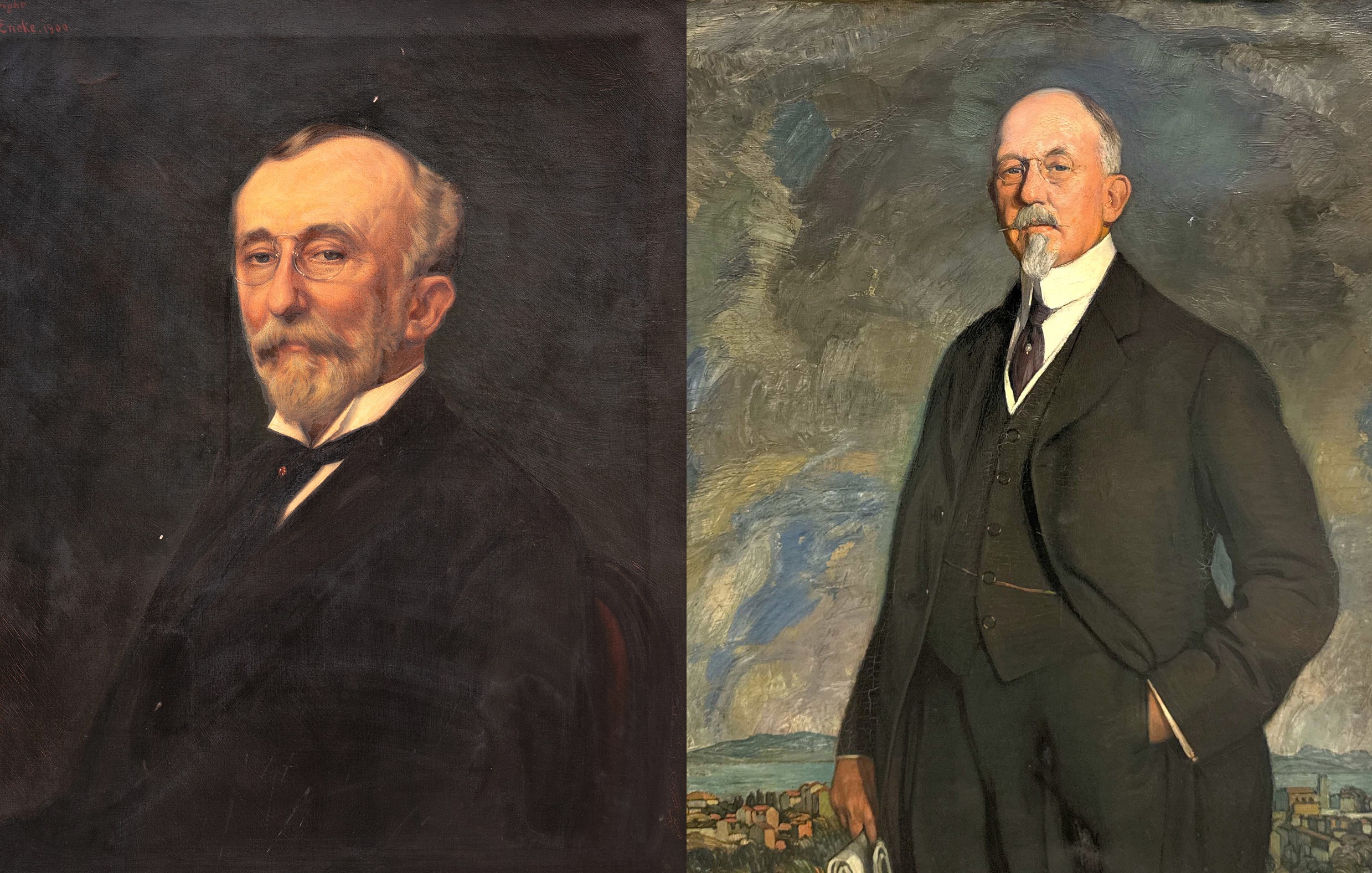
Fahnestock & Co. is founded at Two Wall Street by William Fahnestock, son of Harris C. Fahnestock—prominent financier and founding member of the First National Bank of New York (a Citigroup predecessor).
Becomes a pillar of early American finance, admired for steadiness and trust.
Survival and Strategic Expansion
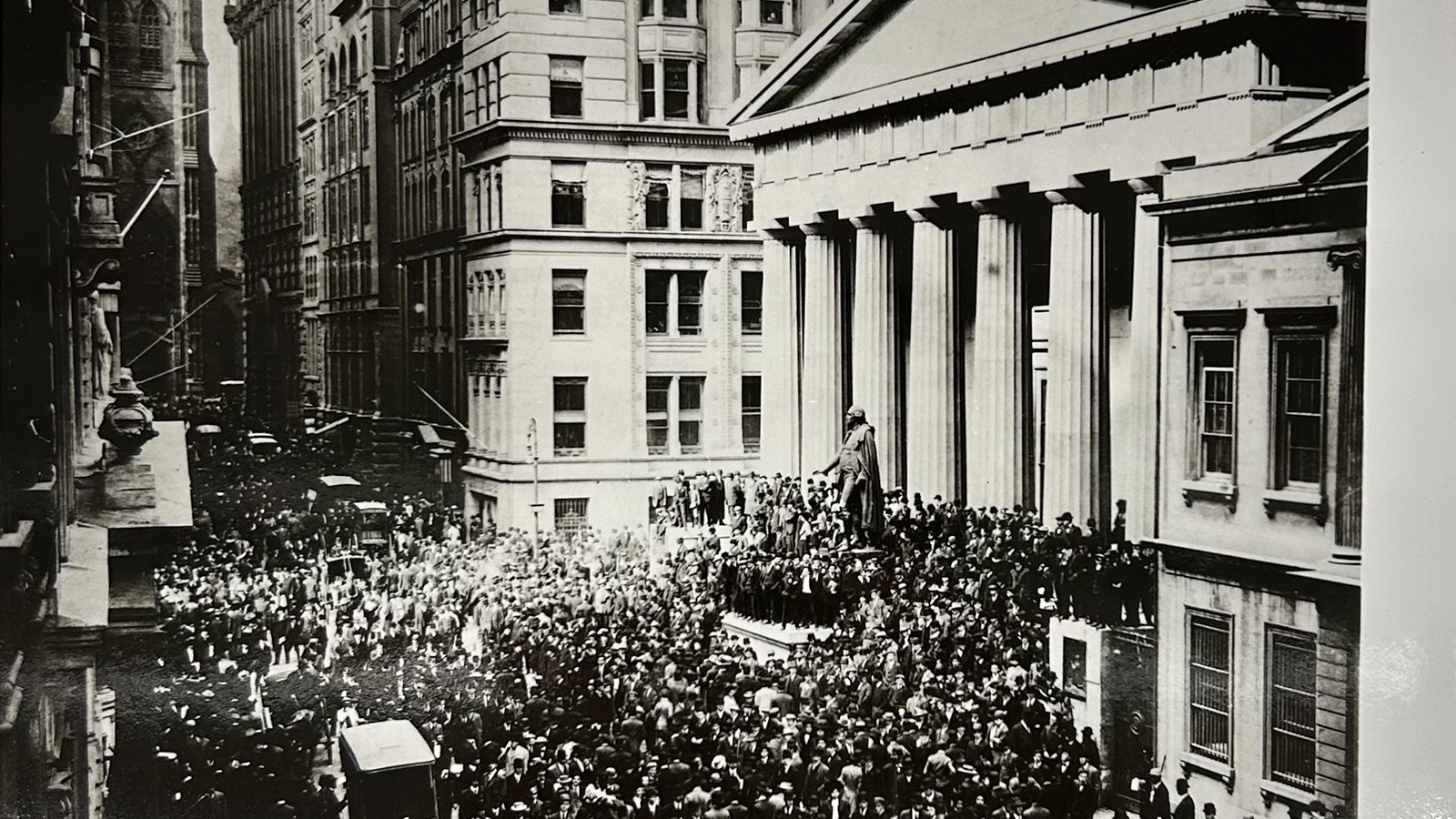
Amid the profound economic upheaval of the Great Depression, the firm demonstrated resilience, discipline, and prudent stewardship. Through conservative management, strong client relationships, and an unwavering commitment to its core principles, it successfully navigated one of the most challenging periods in modern financial history.
As markets stabilized and global conditions evolved, the firm not only endured but positioned itself for measured growth—laying the groundwork for continued expansion in the decades that followed.
©2026 NYSE Group, Inc. All rights reserved.
Broadening the Firm’s Reach
With the absorption of H.L. Horton & Co., the firm strengthened its domestic foundation during a pivotal period in financial history. By 1937, this integration supported continued expansion within the United States, reinforcing its market presence and operational scale.
In the years following World War II, the firm extended its reach beyond U.S. borders, expanding into Europe and South America as global markets reopened and international commerce accelerated. This outward-looking strategy marked an early step toward broader global engagement.
Importantly, this period also contributed to the firm’s evolving corporate lineage. Fahnestock’s history would later connect directly to Fahnestock Viner Holdings through E.A. Viner, linking generations of leadership and shaping the firm’s long-term structural evolution.


The Founding of Oppenheimer & Co.
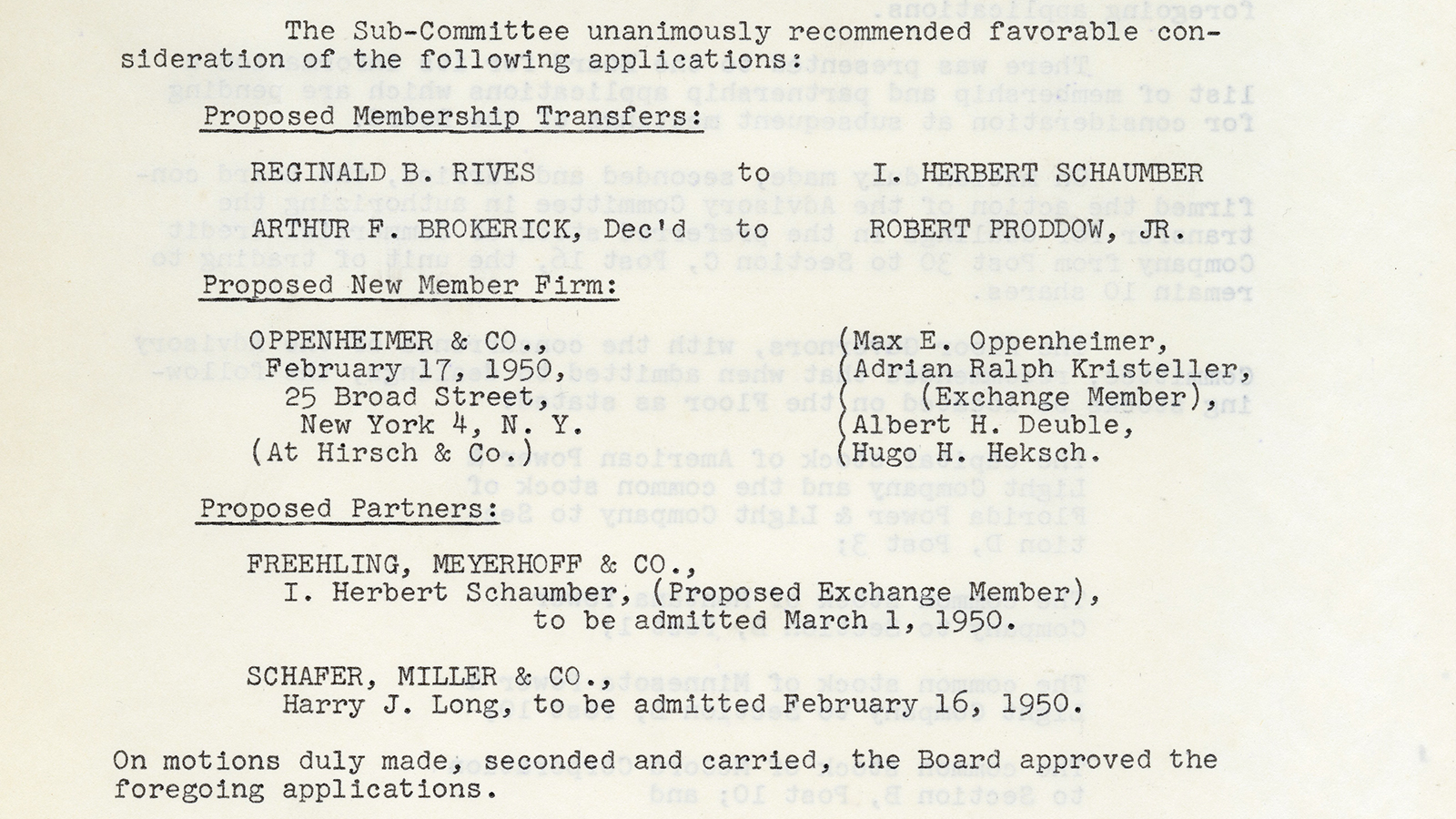
Oppenheimer & Co. is established by Max E. Oppenheimer, a former Lehman Brothers broker, guided by a vision rooted in analytical rigor, disciplined execution, and enduring integrity.
From the outset, the firm concentrates on serving large institutional clients, building its reputation through thoughtful market insight, careful research, and a deep commitment to client relationships. These founding principles would shape the firm’s identity for generations.
Diversification and Platform Expansion
As the financial services industry evolves, Oppenheimer broadens its business model through the creation of three core subsidiaries, expanding both its capabilities and reach.
These include a retail brokerage division, an institutional asset management platform, and a mutual fund management business—later sold to Invesco. This expansion reflects the firm’s growing ambition and its commitment to serving clients across a wider spectrum of investment needs.
©2026 NYSE Group, Inc. All rights reserved.

A Pivotal Acquisition
UK's Mercantile House Holdings acquires Oppenheimer, setting the stage for a new phase of growth and international alignment.

Management Buyback
Stephen Robert and Nathan Gantcher lead a $150 million transaction to repurchase the firm’s broker-dealer, restoring management control.

Oppenheimer's Change in Ownership
Mercantile is acquired by British & Commonwealth; Oppenheimer continues operating independently.
Senior leadership becomes majority owner of Oppenheimer Capital.

The Fahnestock Revival
Fahnestock & Co. is acquired by E.A. Viner Holdings for $7.3M.
Becomes Fahnestock Viner Holdings, led by Albert “Bud” Lowenthal.
National Expansion Through Strategic Acquisitions
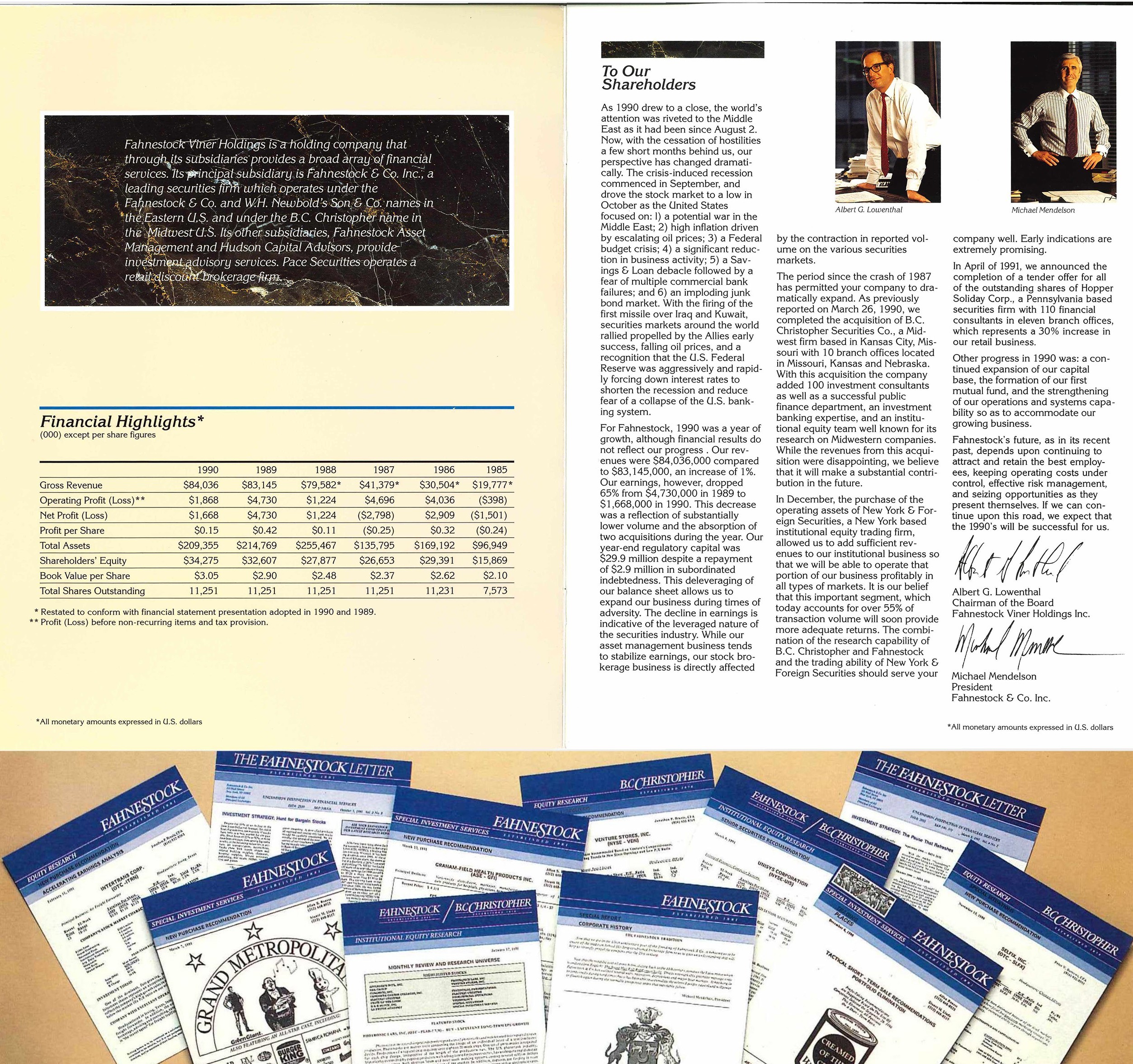
Throughout the 1990s, Fahnestock enters a defining period of national expansion, pursuing a series of targeted acquisitions that strengthen its regional presence, institutional expertise, and growing client base.
Key additions include B.C. Christopher Securities, New York & Foreign Securities Corporation, W.H. Newbold’s Son & Co., Reich & Co., First of Michigan Corporation, and Hopper Soliday —each extending the firm’s reach and adding new capabilities to its expanding national platform.
Pursuing Global Scale and Strategic Alignment
Amid a period of rapid industry consolidation, Oppenheimer sought strategic partnerships that would strengthen its international reach and long-term competitiveness. In 1997, Canadian Imperial Bank of Commerce (CIBC) acquired the firm for $525 million, establishing CIBC Oppenheimer Holdings and marking a significant new chapter in Oppenheimer’s global evolution.
Under the new structure, CIBC Oppenheimer encompassed the private client and asset management businesses, while CIBC World Markets housed capital markets, investment banking, and equities operations.
©2026 NYSE Group, Inc. All rights reserved.

Fahnestock Builds Scale
With the acquisition of Josephthal & Co., Fahnestock significantly enhances its investment banking capabilities while expanding its national footprint and strengthening its competitive position.
The Pivotal Merge
A defining moment came between 2002 and 2003, when Fahnestock Viner acquired CIBC Oppenheimer’s U.S. private client and asset management businesses—including 17 offices in major U.S. markets—for approximately $250 million. The transaction brought together Fahnestock’s 1881 heritage and Oppenheimer’s 1950 legacy.
Recognizing the strength of the Oppenheimer name, the firm adopted it and emerged as Oppenheimer & Co. Inc.—uniting two historic lineages within one modern institution.
©2026 NYSE Group, Inc. All rights reserved.

Capital Markets Acquisition
A major turning point came in 2007–2008, when Oppenheimer acquired CIBC World Markets’ U.S. and international investment banking, research, and trading businesses.
The transaction added more than 700 employees and approximately $400 million in revenue, while expanding the firm’s presence across the United States, London, Israel, and Asia. It also significantly strengthened Oppenheimer’s capabilities in investment banking, equities, research, and fixed income.
As the global financial crisis reshaped the industry and many institutions pulled back, Oppenheimer continued to invest, expand, and evolve—emerging as a full-service, globally connected investment bank.

Independence Drives National and Global Expansion
In the wake of the Great Recession, the firm preserves its independence and enters a period of sustained growth and modernization.
Throughout the 2010s and 2020s, it expands across key markets in the United States while strengthening its international presence. Significant investments in technology, digital infrastructure, trading platforms, data analytics, and client-facing innovation modernize its capital markets, advisory, and private client businesses.
By combining disciplined geographic expansion with a technology-forward strategy, the firm evolves into a more integrated, globally connected enterprise—positioned for long-term leadership across generations.
Leadership Transition
Albert G. Lowenthal (CEO from 1985–2025) becomes Executive Chairman after growing revenue from $5M → $1.4B.
Robert S. Lowenthal becomes CEO & President, ushering in the next chapter.
The unified firm stands today as a multi-generation, diversified, global financial institution built from two powerful lineages.
©2026 NYSE Group, Inc. All rights reserved.